By Jenna Hadden
The rapid advancement of artificial intelligence (AI) has led to an exciting era of potential.
Businesses worldwide are implementing AI systems to enable more efficient operations, enhance customer interactions, and drive data-driven decisions.
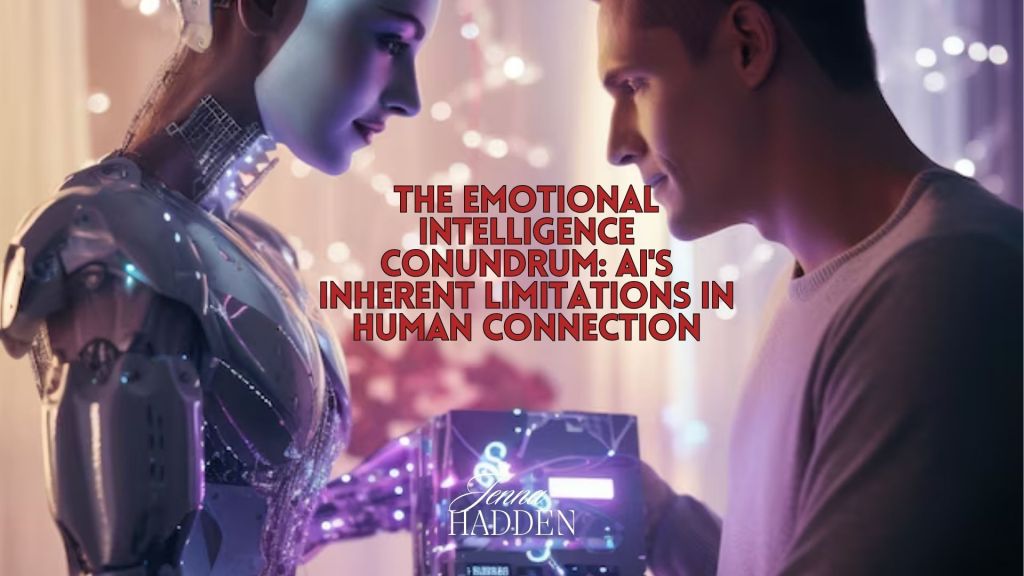
However, in the pursuit of creating emotionally intelligent AI systems, we face profound challenges that expose the conundrum of emotional intelligence and its irreplaceable role in human connections.
This blog explores these inherent limitations, shining a light on why AI may never fully replicate the richness and complexity of human interactions.
Understanding the Essence of Emotional Intelligence
Emotional intelligence (EI) encapsulates the ability to recognise, understand, and manage our own emotions, as well as the emotions of others. It comprises several key components:
- Self-awareness: The ability to understand one’s emotions, strengths, and weaknesses.
- Self-regulation: Managing one’s emotions and impulses effectively.
- Motivation: The internal drive to pursue goals with energy and persistence.
- Empathy: The capacity to understand and share the feelings of others.
- Social skills: Managing relationships to move people in desired directions.
These components work cohesively, allowing humans to engage in complex emotional exchanges.
This capability is significantly challenged when we turn our focus to AI systems.
The Inherent Limitations of AI in Emotional Intelligence
1. Lack of Genuine Understanding
AI systems, even those equipped with advanced algorithms, fundamentally lack the capacity for genuine understanding.
Unlike humans, who possess the ability to empathise based on personal experiences and emotions, AI relies on data-driven patterns, devoid of personal context.
Consequently, nuances in emotional exchanges can be lost in translation.
2. Absence of Human Experience
At its core, emotional intelligence is a reflection of lived human experiences—an element AI simply cannot replicate.
The rich tapestry of human life, filled with triumphs, tragedies, joy, and sorrow, shapes our ability to connect with others.
AI might analyse sentiment through textual cues, but it cannot authentically experience or express emotion.
3. Limitations in Contextual Response
AI may struggle to accurately interpret the context of human interactions.
For example, a joke shared among friends can be perceived quite differently based on tone, body language, and shared knowledge of the individuals involved.
AI lacks the subtle contextual awareness that comes naturally to humans, leading to potential misinterpretations and, ultimately, disconnection.
4. Ethical Implications of AI in Emotional Situations
Deploying AI in emotionally charged situations raises ethical concerns.
Consider the use of AI in mental health support—while it can provide resources and information, the failure to understand the emotional undertones of a conversation could lead to inadequate responses and potential harm to vulnerable individuals.
Accelerating Our Understanding of Human Connection
While AI continues to evolve, the importance of emotional intelligence remains undiminished in our society.
In navigating the limitations of AI, we must enhance our appreciation for human-to-human interactions. Here are some key considerations:
- Invest in Human Skills: In a digital age, employees equipped with strong emotional intelligence skills will be invaluable assets within organisations.
Training that fosters these abilities can bridge the gap between artificial intelligence and human connection. - Focus on Collaboration: Rather than compete against AI, seek opportunities for partnership.
Humans can collaborate with AI to enhance productivity while retaining the emotional nuances in interactions. - Understand Limitations: Continued discourse surrounding the emotional intelligence conundrum is vital.
Acknowledge the boundaries of AI capabilities while advocating for the remarkable qualities of human connection.
The Irreplaceable Value of Emotional Intelligence
AI’s limitations should serve as a pertinent reminder of the importance of emotional intelligence in fostering meaningful connections.
Despite technological advancements, the essence of emotional understanding remains inherently human.
As we innovate, we must also cultivate emotional intelligence—the cornerstone of successful relationships in our personal and professional lives.
In conclusion, while artificial intelligence will undoubtedly play a critical role in shaping the future, it is crucial to preserve and elevate human connection.
Let us embrace both worlds, recognising that while AI can enhance efficiency, it cannot—not now or in the foreseeable future—replace the essence of what makes us human.
Our journey towards understanding the complexities of emotional intelligence will be ongoing; however, as we navigate this conundrum, let us remain committed to valuing the irreplaceable human touch in all our interactions.
Join the conversation on emotional intelligence and AI. How do you see the future of these interactions? Share your thoughts below!
#EmotionalIntelligence #AI #HumanConnection #Empathy #MentalHealth #EthicsInAI #TechnologyAndSociety #AIConundrum #JennaHadden #FutureOfWork
Related Blogs:
The Mentor Effect: Transforming Your Journey Through Guidance
1 Problem, 3 Solutions, 1 Recommendation: Mastering the 1-3-1 Rule for Success
From the Field to the Boardroom: How Sports Shape Winning Business Leaders
The Competitive Edge: Why Sports-Minded People Excel in the Business World


 Jenna Hadden